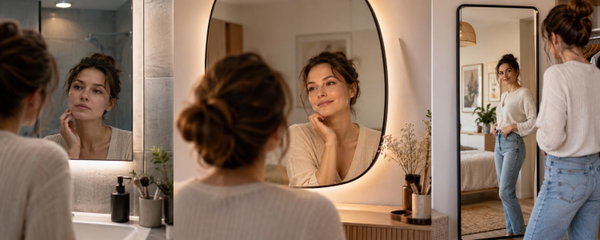
Where should you place a mirror in the bedroom? Practical rules that work
A mirror in the bedroom can make getting dressed easier, brighten a dark corner and make the whole room feel more spacious. But choose the wrong spot and you may end up looking at your own reflection or a pile of clothes from bed instead of enjoying a lighter, more open interior. So where should you place a mirror, what size should you choose, and is having one opposite the bed really a problem?
A mirror in the bedroom can be a subtle everyday helper, but it can also have a significant effect on the look of the whole room. In the morning you can check your outfit, during the day it can reflect light into a darker corner, and a well-chosen larger mirror can make the space feel more open. But where should you actually place a mirror in the bedroom? Above a chest of drawers, beside the wardrobe, opposite the window – or even opposite the bed? Before you start drilling into the wall, it is worth thinking through a few simple rules that can save you from having to move the mirror later.
🪞 First decide what you will use the mirror for
The first question should not simply be “Which shape do I like?”. It is much more important to consider what you want to do in front of the mirror. That determines the best position, size and lighting.
- For getting dressed: you need a tall mirror and enough space to step back comfortably.
- For make-up and hair: good facial lighting and the right height matter more than the overall size of the mirror.
- To make the bedroom feel larger: the size of the reflective surface matters, but what it reflects matters even more.
- As decoration: you can choose a more distinctive round, arched or asymmetrical shape.
If you are still looking for the right solution, start with bedroom mirrors and choose according to the role the mirror needs to play in the room.
📍 1. Beside the wardrobe: the most practical place every morning
If you get dressed in the bedroom, the area beside the wardrobe is usually the most logical choice. You can take out your clothes and check the whole outfit immediately without having to walk into another room.
The most practical option is a vertical full-length mirror. It does not have to sit directly next to the wardrobe – what matters more is having enough space in front of it and making sure open wardrobe doors do not block the mirror.
💡 Tip: Do you only have a narrow strip of free wall between the wardrobe and the door? That is often the perfect place for a tall, narrow mirror that would be difficult to fit elsewhere.
🛏 2. Can a mirror face the bed?
This is probably one of the most common questions about mirrors in the bedroom. The answer is simpler than some rules online make it sound: yes, it can. From a practical point of view, there is no universal reason why a mirror opposite the bed should automatically be a bad choice.
What matters much more is whether the position feels comfortable to you. A large reflective surface can catch movement in low light, light from the hallway or the headlights of passing cars. Some people do not notice this at all, while others may find their own reflection distracting when they are trying to fall asleep.
👉 Before fixing a large mirror permanently opposite the bed, try the position temporarily first. If your own reflection bothers you in the evening, a side wall will probably work better.
☯️ What does feng shui say about mirrors in the bedroom?
Traditional feng shui principles often recommend avoiding a mirror positioned directly opposite the bed. This advice is based on the belief that mirrors affect the flow of energy in a room and may disturb the sense of calm needed for rest.
It is useful, however, to distinguish traditional feng shui rules from practical interior design advice. If you do not follow feng shui and the reflection does not bother you, there is no practical reason to avoid a mirror opposite the bed. If the tradition matters to you, place the mirror on a side wall, beside the wardrobe or above a chest of drawers.
☀️ 3. Opposite the window: a simple trick for a brighter bedroom
Is your bedroom small or a little dark? Try thinking of the mirror as more than just a surface for checking your reflection.
If the mirror catches daylight from the window, it can reflect that light back into the room and make the space feel brighter and deeper. The larger the reflective surface, the stronger the effect can be.
That is why you do not need to be afraid of a large mirror even in a smaller bedroom. One larger mirror can actually look lighter on the wall than several small decorations while having a much stronger effect on the sense of space.
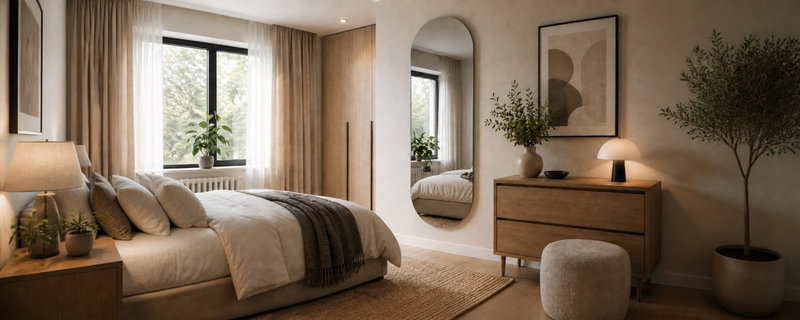
💡 Small trick: Do not automatically place the mirror exactly opposite the centre of the window. First check what you will actually see in it from the places you use most often in the bedroom. The best position is one that catches the light while also giving you a pleasant reflection.
🗄️ 4. Above a chest of drawers or as decoration: when the mirror becomes part of the interior
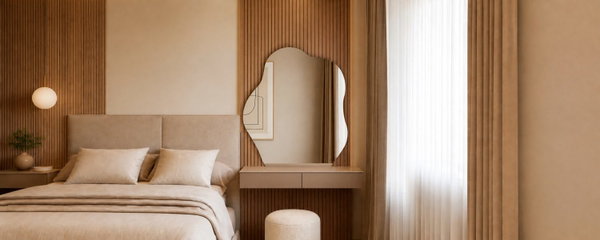
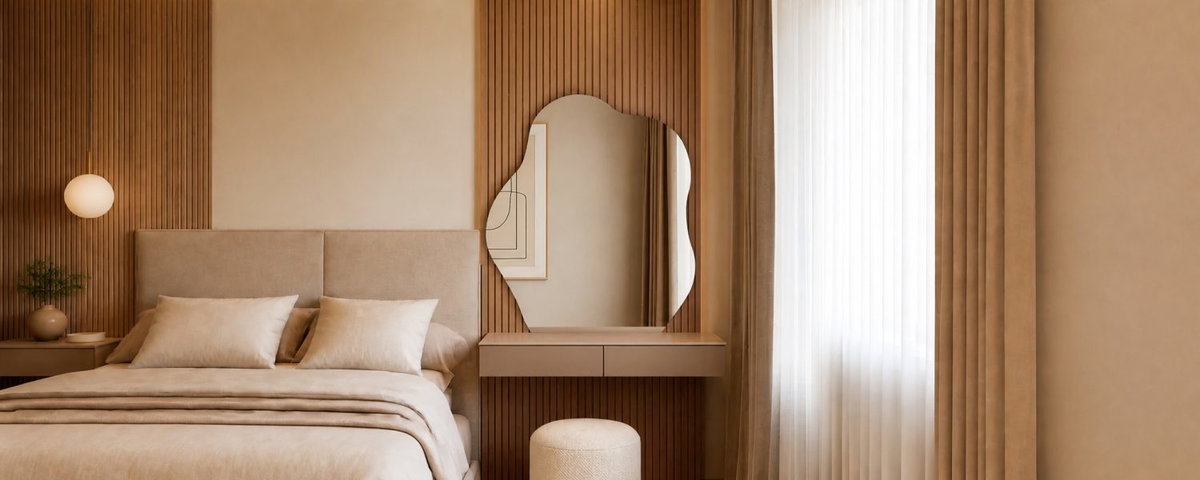
A free wall above a low chest of drawers is almost an ideal place for a mirror. It creates a balanced composition that can replace a picture or another wall decoration. In the bedroom, a mirror does not have to be purely practical either – it can become a strong design feature.
So you do not need to stick to the classic rectangle. These options work particularly well:
- round mirrors, which soften the straight lines of the chest of drawers,
- arched mirrors for a calmer and more elegant look,
- organic and asymmetrical shapes, if you want the mirror to become a stronger focal point on the wall,
- wide horizontal mirrors above a longer chest of drawers.
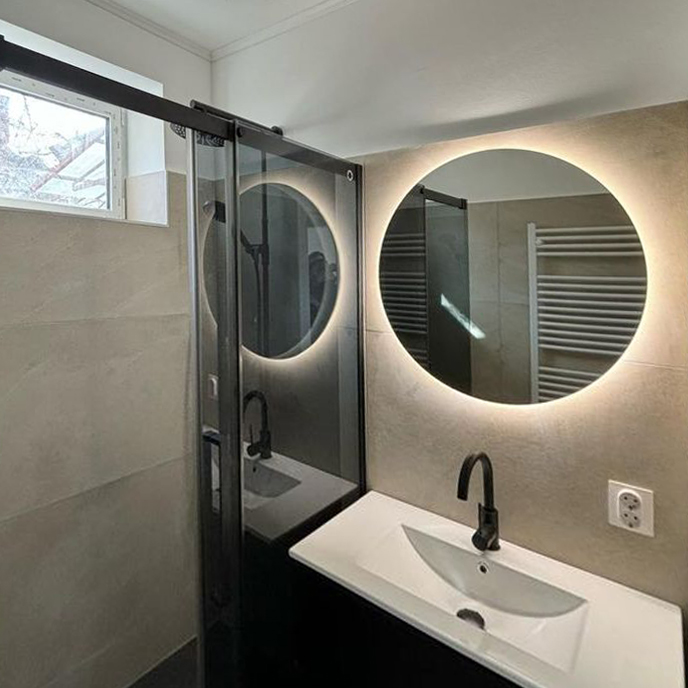
If the mirror is intended primarily as part of the interior, take a look at the decorative mirrors as well. In the bedroom you can allow yourself more freedom than, for example, in the bathroom – the mirror does not need to be perfectly symmetrical or positioned exactly in the centre of the wall.
When choosing, do not think only about the shape of the mirror. What will be reflected in it is just as important. A mirror visually doubles everything positioned in front of it.
What is worth reflecting?
- a window and natural daylight,
- plants or an attractive corner of the room,
- a calm and tidy part of the interior,
- a statement light fitting or another design detail.
And what is better avoided?
- an open and overfilled wardrobe,
- a pile of clothes,
- a desk full of cables,
- other visually cluttered parts of the room.
In the latter case, the mirror will not make the space feel calmer – quite the opposite, it can make it look as though there are even more things in the room.
📐 How large should a mirror above a chest of drawers be?
There is no single compulsory size, but the proportions of the whole arrangement should feel balanced. A mirror that is too small can get lost on the wall, while a model that is much wider can visually overpower the furniture.
- 80 cm chest of drawers: consider a mirror around 50–70 cm wide.
- 100 cm chest of drawers: a mirror around 60–80 cm wide can work well.
- 120 cm chest of drawers: you can choose a mirror around 70–100 cm wide.
- 140 cm chest of drawers or larger: there is room for a larger statement mirror or a wide horizontal model.
These measurements are only a guide. With irregular shapes, the overall visual size of the mirror matters more than its maximum width.
↕️ 5. Full-length mirror: how large does it really need to be?
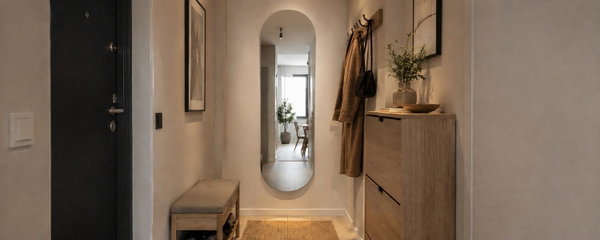
If you want to see yourself comfortably from head to shoes, you do not automatically need to buy a two-metre-high mirror. From an optical point of view, the mirror can be significantly shorter than the person using it – the key is mounting it at the right height.
For everyday use, mirrors around 140–170 cm high are practical because they offer more flexibility when positioning and can be used comfortably by people of different heights.
📏 Practical rule: The top edge should be high enough for even the tallest person in the household to see their whole head comfortably. At the same time, the lower part should allow the shoes to remain visible. Always adjust the exact height to the people who will actually use the mirror.
💄 6. Above the dressing table, lighting matters most
The rules are slightly different at a dressing table. Here you do not need to see your whole body, but above all your face without distracting shadows or distorted colours.
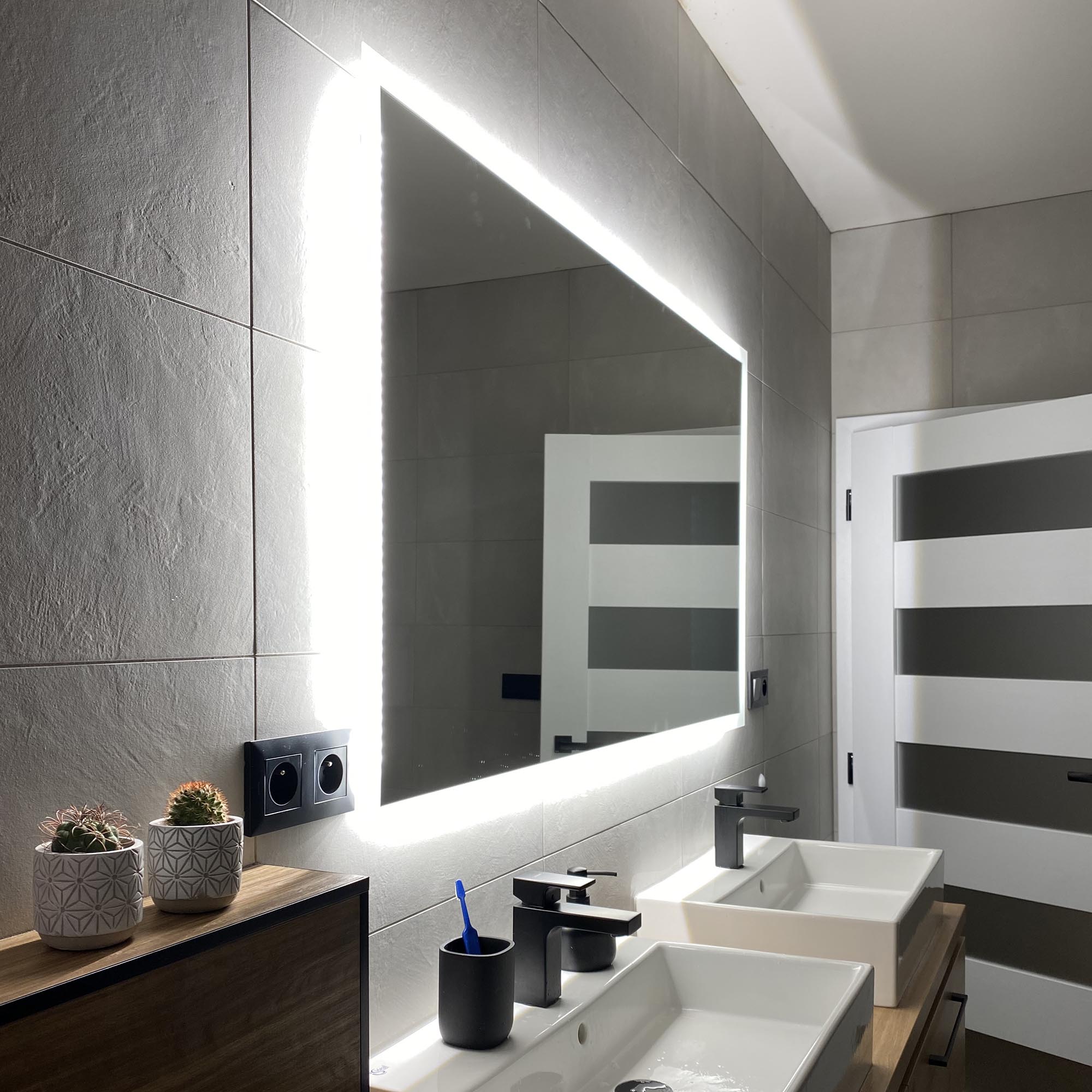
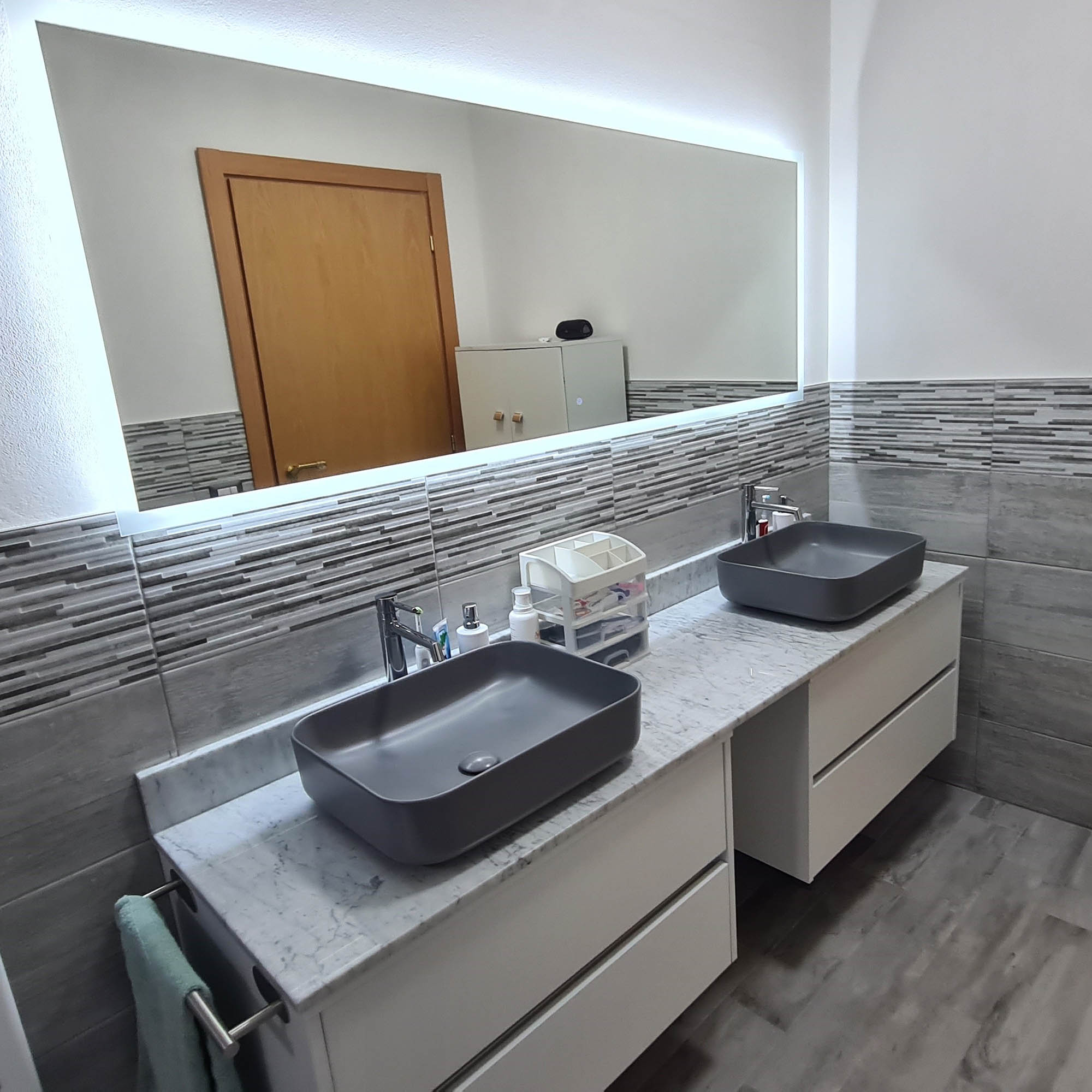
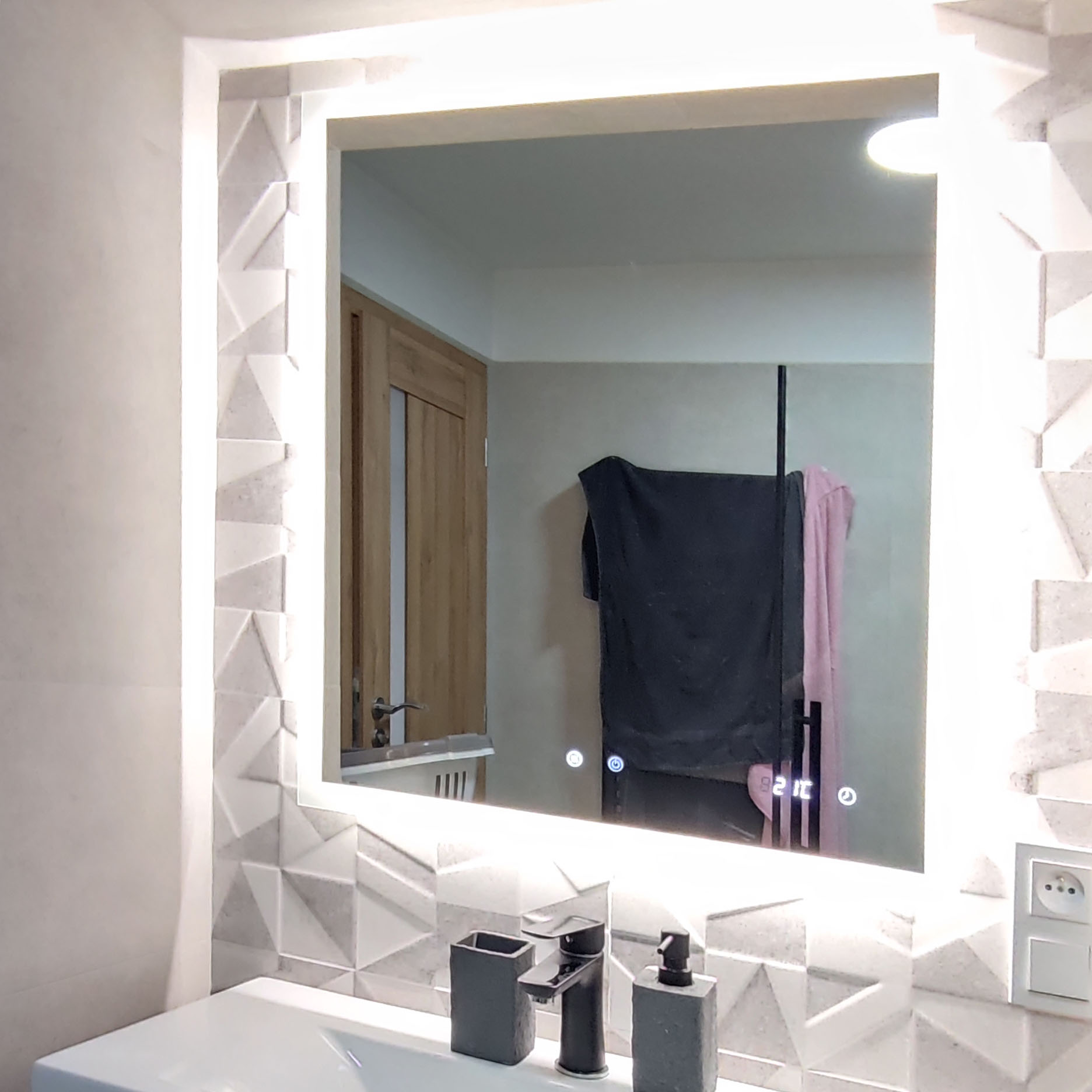
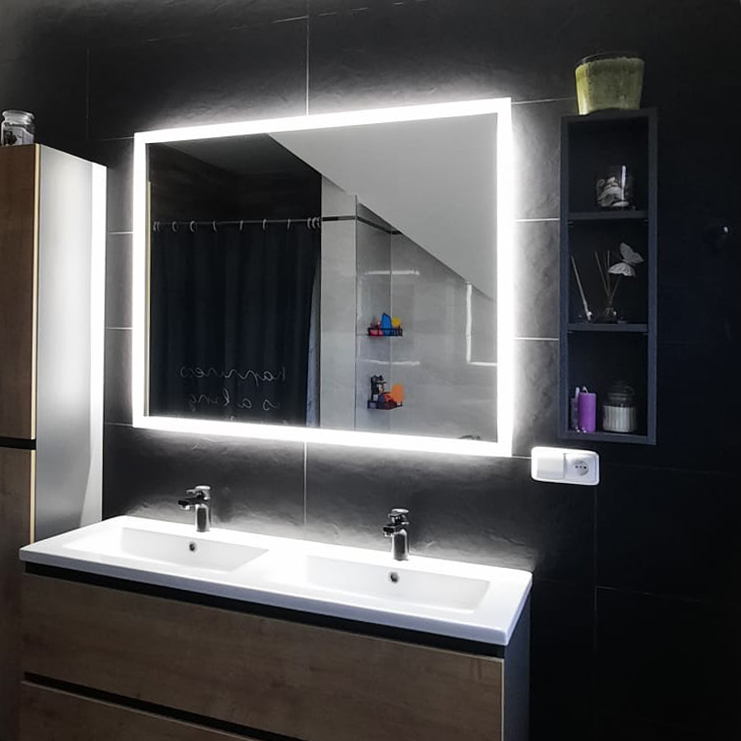
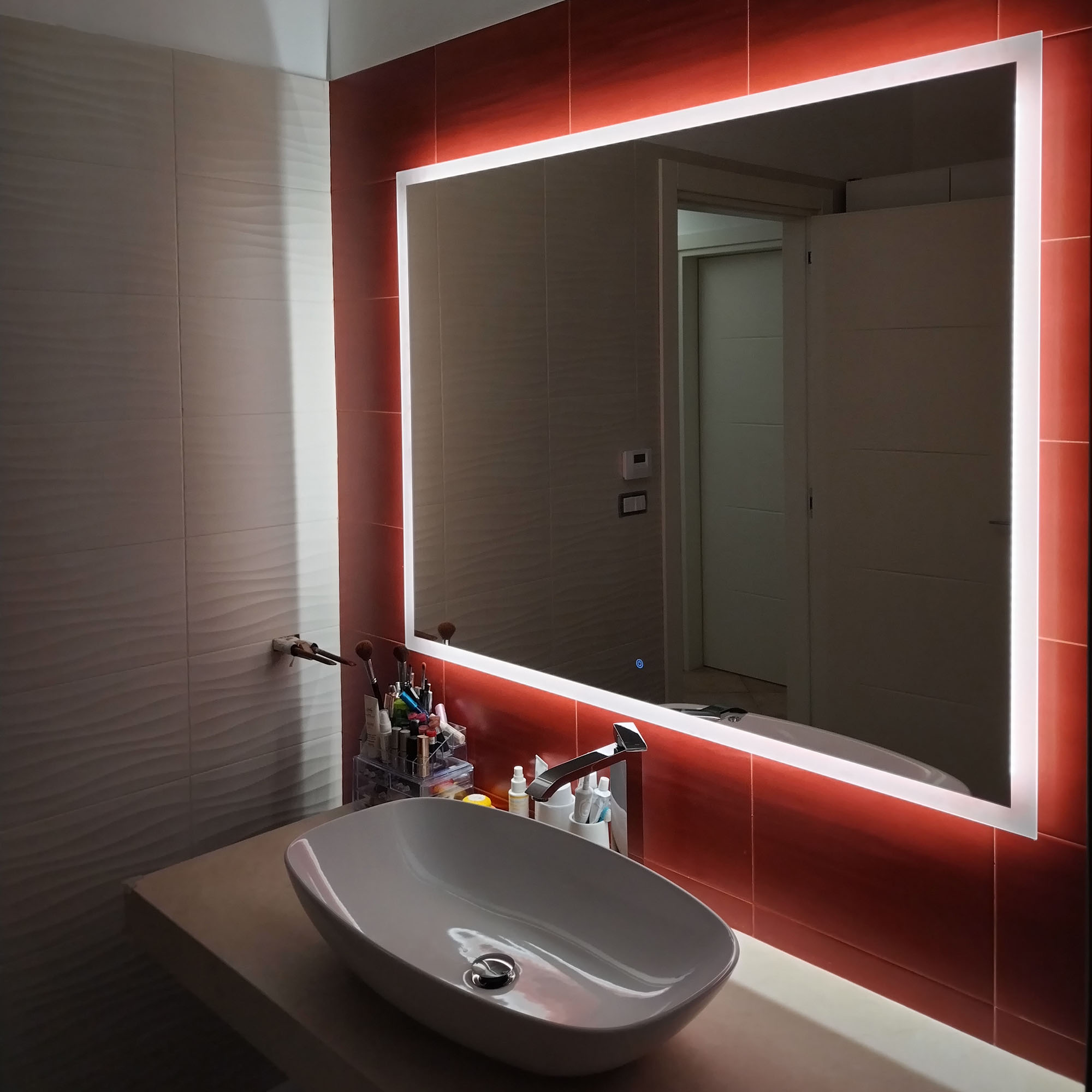
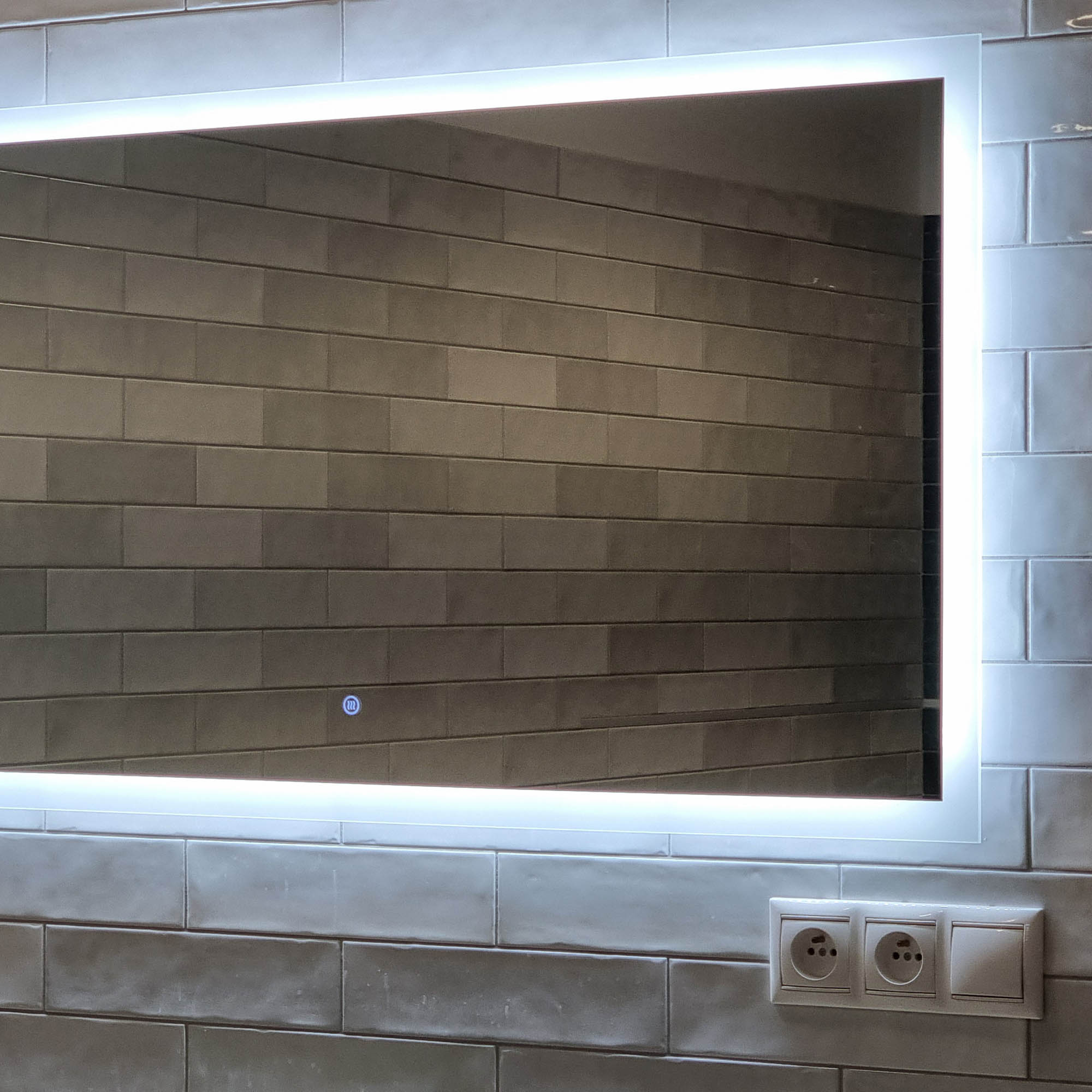
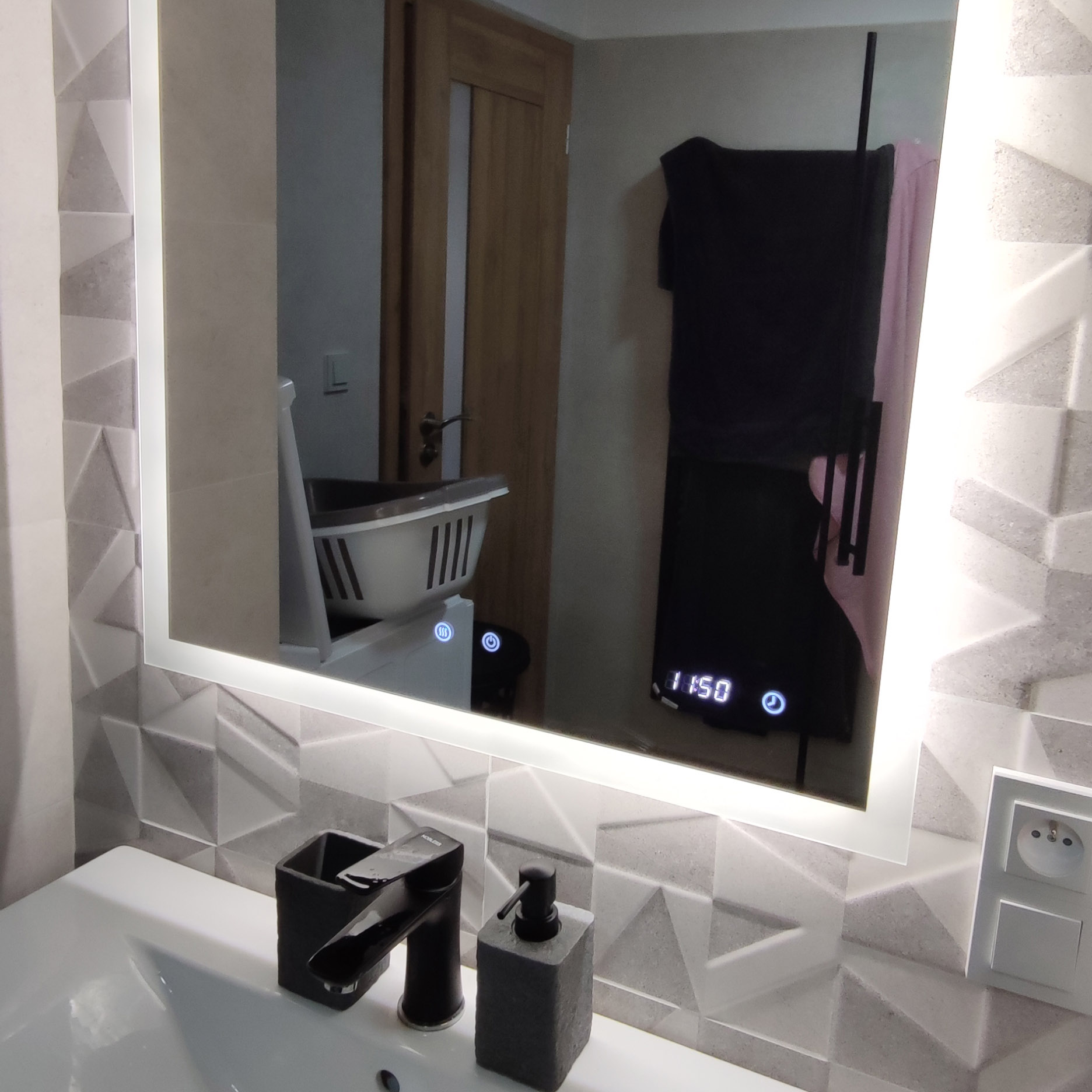
Position the mirror so that its centre is roughly at eye level when you are seated. If the area is darker, a practical solution can be an LED mirror, which provides light exactly where you need it.
For make-up and shaving, we recommend lighting in neutral to cooler tones. A colour temperature of around 5000–6500 K is ideal because it is close to natural daylight and helps you judge colours and details more accurately.
A practical alternative is Dual Colour lighting, which lets you adjust the light temperature according to your needs. For the best results when applying make-up or shaving, choose even lighting around the entire perimeter of the mirror. Light coming from several directions helps reduce strong shadows on the face and provides more even illumination.
⚠️ 5 mistakes that stop a bedroom mirror working well
- You choose the size only according to the free wall space: also consider the distance from which you will use the mirror.
- You do not check the reflection: a beautiful mirror in the wrong place can simply double the clutter.
- You mount a full-length mirror too high or too low: before installation, check that the position works for both the tallest and shortest person who will use it.
- At the dressing table, you focus on design but not lighting: for everyday make-up and shaving, the right lighting matters more than a striking shape.
- You follow universal rules blindly: every bedroom has different dimensions, windows, doors and furniture layouts. What works in an inspiration photo may not work equally well in your own home.
🪞 So where should you finally place the mirror in the bedroom?
If you want a simple rule, follow its function. For getting dressed, place it beside the wardrobe; for make-up, above the dressing table; for more light, near or opposite the window; and as decoration, above a chest of drawers or on a free wall. A mirror opposite the bed is not a mistake in itself – what matters is whether the reflection bothers you.
Before making the final decision, stand in the places from which you will use the mirror most often and imagine not only its shape on the wall but also the entire future reflection. That is often what determines whether the mirror genuinely improves the room.
👉 Looking for a mirror beside the wardrobe, above a chest of drawers or at the dressing table? Browse the bedroom mirrors or decorative mirrors. If you need to make use of an unusual alcove or already know exactly which size you need, you can also design a made-to-measure mirror.